What is the Best Boat Sealant?
By Scott Hogan, Plastic Maritime
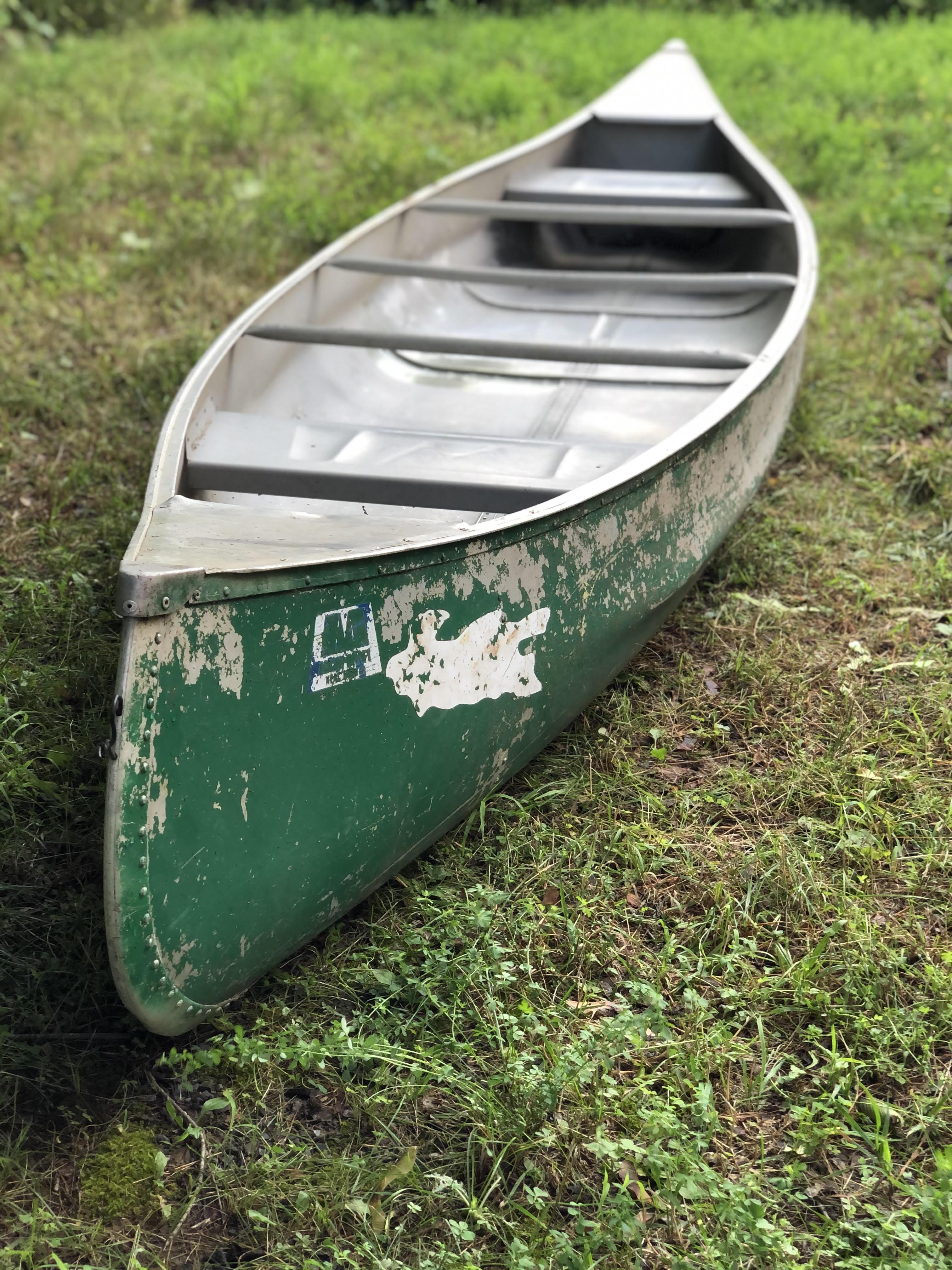
Over the many of years of working in marine and freshwater boat coatings industry, there is one question in particular that I have been asked countless times, “What is the best boat sealant for sealing up leaking rivets, punctures, or breached seams on an aluminum boat?”
For years I suggested using 5200 by 3M, because it is commonly used in the industry and has a good reputation. However, I’m the type of person that has never felt comfortable making a product recommendation without using or testing the product myself. I decided it was time to experiment and find out which of the sealants performs best. So, I went out and bought every boat sealant brand I could find, both online and at local hardware stores.
But first, let me state for the record, neither myself nor the company I work for, has any special interest in any particular product. We have no special deals with any of the brands we mention. When we purchase sealant, we buy it at retail like everybody else. The experiments I performed were 100% objective.
Here are my findings: Some of the most common and best known sealants have subtle, but significant, problems. Many become too brittle after curing, and crack when there is any flexing of the aluminum. Others are too finicky to use. And some exhibited weak adhesion to the aluminum.
After going through all of them, the two that seemed to perform the best were, in fact, “5200 Marine Fast Cure” and a product called “Amazing GOOP Marine”.


So, I decided to put the two of them into a more vigorous Head-to-Head test, to see which one is the very best overall.


Both 5200 and GOOP performed well in our below-the-waterline tests (not shown). And both seemed fully cured and dry after 24 hours to 48 hours, as advertised.
But here are the key differences,…
1.) GOOP has proven to be both tougher and more elastic than 5200. When stretched, GOOPS breaking point is much later than 5200’s. Furthermore, GOOP is far superior on the tear test. See in this video how once slightly cut and then pulled, how the 5200 tears apart more easily, while GOOP still remains elastic and refuses to tear. Aluminum boats, especially shallow water aluminum boats, need their seals to be both tough and elastic to keep rivets and seams plugged when under the stress of abrasion, jarring and flexing.
2.) Most importantly, a sealant needs to have very strong adhesion to the aluminum. Seals can lose adhesion with flexion, or can dislodge with impacts. Getting optimal adhesion to aluminum is absolutely critical for long term success. 5200 exhibited very good adhesion to aluminum, but in our adhesion tests, GOOP showed better overall adhesion to bare aluminum than the 5200. See the video below.
3.) GOOP flows very well, which helps it seep into fine seams and rivet holes and settle into a smooth finish on it’s own. 5200 has more of a pasty, high build nature, which means you have to spread and push it into gaps and then manipulate a smooth finish.
4.) The GOOP is also more shelf stable as it appears to last indefinitely after initial use; 5200 needs to be all used at once, or it turns into an unusable brick within 1-2 days.
5.) GOOP comes in a 10 oz tube that fits in a standard caulk gun, at half the price of the same sized tube of 5200, making it much more economical.
So, to answer the question, “What is the best boat sealant for an aluminum boat?”, Marine GOOP is my new answer. Better performance at a great price makes the decision fairly easy.
But there is another, more important question worth asking here: What is the best way to fix leaks and protect against leaks going forward?
Using a top-notch sealant is a good start, but in terms of really securing existing leaks, and preventing future leaks, sealant alone can often fall short. Over-coating all of your rivets, seams, and seals with a good, high quality boat coating is equally important for the long term success of stopping leaks. If you choose to use GOOP, or 5200 for that matter, such good and flexible sealants need a good and flexible coating to go over the seals, to protect both the integrity of the seal and protect against future breaches. Many boat paints do not adhere well to particular sealants and will crack off and undermine the entire seal. Understanding that, it is crucial that you get a bottom coating that is both flexible and has great adhesion to the sealant AND the surrounding aluminum. “Wetlander” is a perfect example. Wetlander boat coatings have excellent adhesion to both aluminum and to the sealant itself. Coating Wetlander over your seals, and over your floor and/or hull bottom, will create a double-protected waterproof seal on your leaking boat, without having to weld it shut. This makes a huge difference.


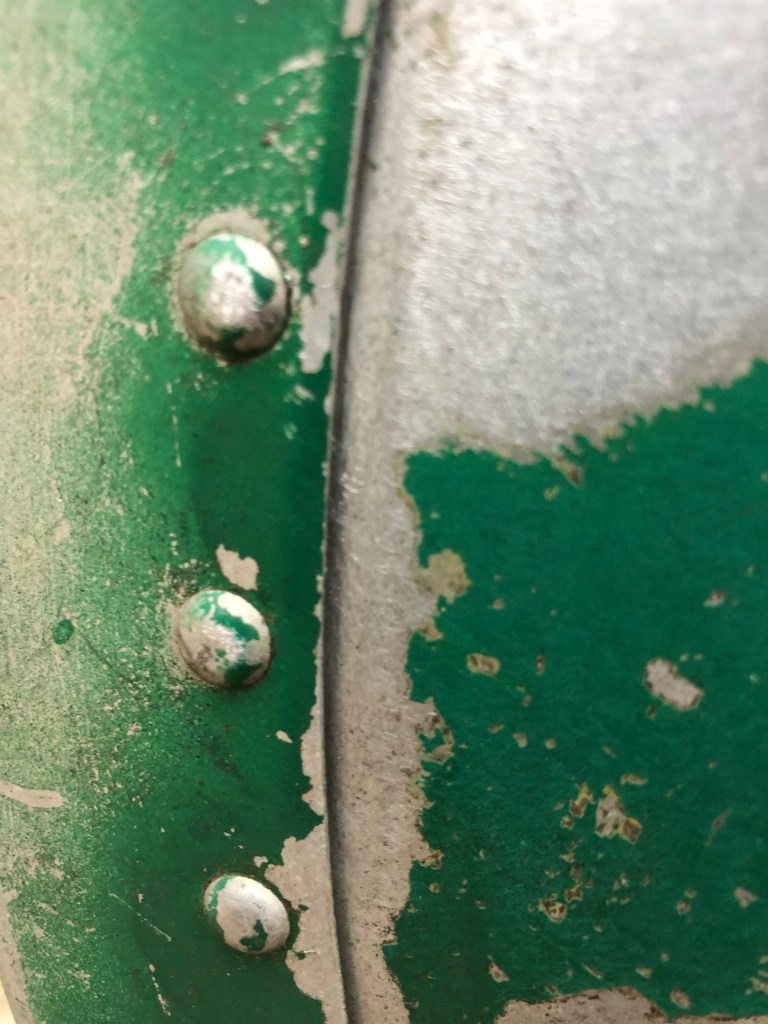

You can see in these pictures how coating over your rivets not only helps seal the rivet, but you can see how the rivet becomes less exposed, and therefore less vulnerable to catch on something and tear open. And being that Wetlander is an anti-friction coating, it further helps the boat and it’s rivets slide over surfaces, rather than scraping. So finally, to answer the “better” question,… “What is the best way to fix leaks and protect against leaks going forward?”,… I think the best answer is to apply GOOP to my leaky rivets and seams, and then overcoat all of the rivets and seals with a Wetlander coating to ensure a robust and complete leak-stopping system.
Click here to learn more about GOOP, Wetlander floor coat, topside paint, and the Wetlander slick bottom boat coatings, a top selling bottom coating for rugged-use aluminum hunting and fishing boats. You can also call me, Scott Hogan, at 518-469-3612.
Want even MORE protection for your boat?!

Older aluminum boats with rivets and seams get leaky over the years; It’s unavoidable. And if you’re not a welder, or have never bucked rivets before, there aren’t many good options to stop leaks in your aluminum boat. Sometimes, the quick fix is a tube of GOOP and then cross your fingers and hope for the best….
For a more long-term solution, we have developed a simple 4-Step sealing system to make your leaky aluminum hull stop leaking, all in your own backyard, with standard tools.

STEP 1: Cover all the rivets, gaps and seams with GOOP!


Use a tube of Amazing GOOP to seal up any loose rivets or weeping seams. -Using a standard caulk gun, simply apply a bead of the Amazing GOOP to any areas you want to seal up. Then using a gloved finger, wipe the GOOP into the area you are trying to seal up. It’s just like caulking a bathtub, so don’t overthink it. Do this on both outside AND inside of the hull (if you have access).

Pro Tip: Adding a little acetone to your gloved finger allows your finger to slide much easier along the GOOP. Allow the GOOP to cure for 24-48 hours.
STEP 2: Apply Rivet and Seam Epoxy


Stripe the GOOP, seams and rivets with Rivet and Seam Epoxy – Simply roll a layer of Rivet and Seam Epoxy over each strip of GOOP, every seam, and every rivet. Again, do this on both the inside and outside of the boat, and everywhere you have applied GOOP. Together with the GOOP, our Rivet and Seam Epoxy reinforces and protects the already durable leak stopping caulk line and fully encases the GOOP layer in a protective and flexible coating.
Step 3. Apply your FINISH COAT (Inside hull)


On the inside of the hull, apply Wearlon No-Slip Floor Coat, in 2 complete layers. Floor Coat has 3 different grades of grit embedded in it to keep you from sliding around. A standard roller will do the job.


Pro Tip: Have a cheap foam brush handy for hard to reach areas, awkward seam lines and rivet heads.
Step 4. Apply the FINISH COAT (Outside)


On the outside of the hull, apply a Wetlander 2-Layer kit, or (even better) a Wetlander 3-Layer kit for even more protection. Wetlander kits resist corrosion, electrolysis, and makes the bottom of your hull MUCH slicker to reduce drag and to make launching/loading/portage MUCH easier. All of this further protects your GOOP repair, adds more layers of flexible and waterproof protection, and improves the performance of your boat.
Once it’s all dry… Your leaks are gone.

In the end, you will have a protection sandwich, a 5-layer quintuple layer leak stopping power lasagna of impenetrability, a water stopping aluminum fortress of flotation, all of it improving the performance of your boat; Super slick on the outside for better speed, no slipping/sliding on the floor, and those annoying leaks that have been bugging you for years are finally GONE. So what are you waiting for?! The time to finally fix your leaky tin can IS NOW!


You can find all of the products you will need for the 4 Steps right here. Call Scott at 518-469-3612 if you have any questions.
 What is the Best Boat Sealant